


Environment Redesign
Most people think they need to redesign themselves…
However, often, what actually needs to be redesigned is the environment around them.

At Oak & River, Environment Redesign is the process of identifying and intentionally reshaping the invisible systems influencing human wellbeing, regulation, connection, clarity, and performance.

Environments are never neutral.

They shape how we think, feel, communicate, recover, learn, lead, relate, and function every day, often in ways we barely notice until we reach exhaustion, conflict, overwhelm, burnout, or disconnection.

This work helps make those invisible dynamics visible.

Once they become visible, they can begin to change.
The Philosophy

Many people spend years believing something is wrong with them, when in reality they have simply adapted to environments that are asking too much of the human nervous system.
Environment Redesign offers another lens.
One that asks: What if the environment itself is part of the solution?
Environment Redesign is rooted in the understanding that human flourishing is deeply connected to the environments we move through.

Not only physical environments, but emotional, sensory, relational, cognitive, organizational, and cultural environments as well.

A beautifully designed room cannot compensate for chronic emotional tension.

A highly capable employee may still struggle within a system built around constant urgency and ambiguity.

A child’s behaviour may reflect nervous-system overload rather than defiance.

A family may not need to “try harder,” but instead need gentler rhythms, clearer communication, better transitions, or more sustainable emotional expectations.
Invisible Systems
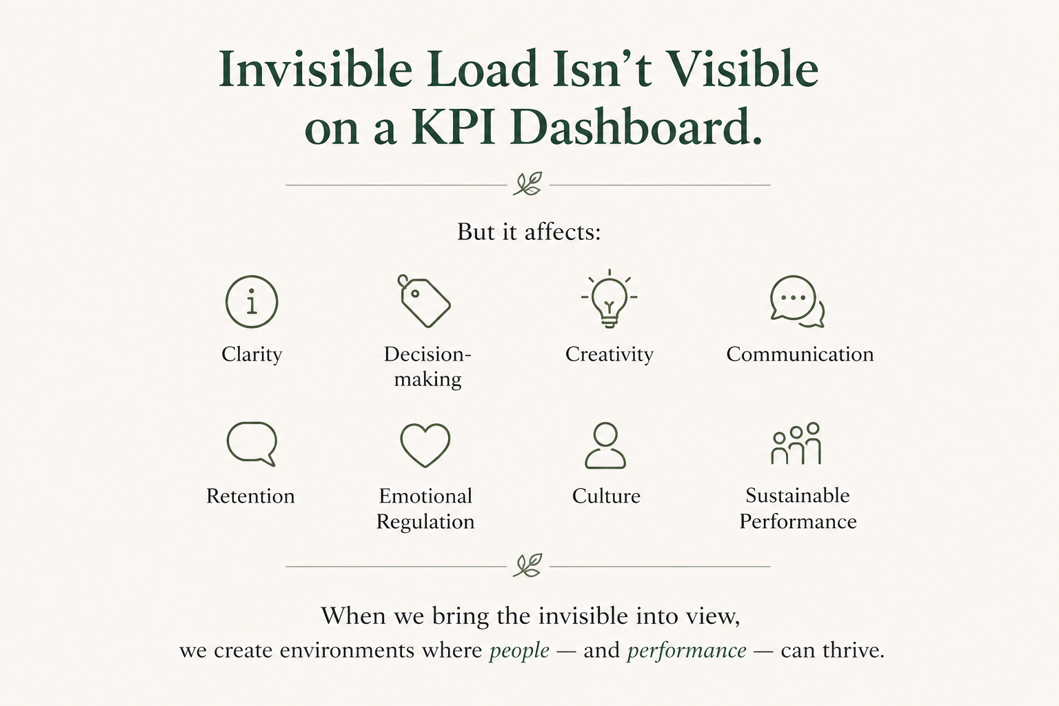
Many of the forces shaping wellbeing are difficult to see at first.

Invisible systems may include:

•sensory overload
•cognitive clutter
•emotional tension
•unclear expectations
•constant interruption
•lack of recovery time
•communication patterns
•family roles
•workplace culture
•transitions without support
•perfectionism and invisible emotional labour
•environments designed without neurodiversity in mind
Over time, these systems accumulate pressure.
People often describe this as:
•feeling constantly “on”
•difficulty recovering
•decision fatigue
•emotional reactivity
•shutdown or burnout
•increased conflict
•exhaustion despite rest
•reduced clarity or creativity
•feeling disconnected from themselves
Environment Redesign helps uncover the patterns beneath the surface and create more supportive conditions moving forward.The Domains We Explore
Every environment is unique.
Depending on the individual, family, school, or organization, our work may explore areas such as:
What This Can Look Like
Environment Redesign is deeply practical.
Sometimes the changes are structural.
Sometimes relational.
Sometimes sensory.
Sometimes emotional.
Often, they are interconnected.
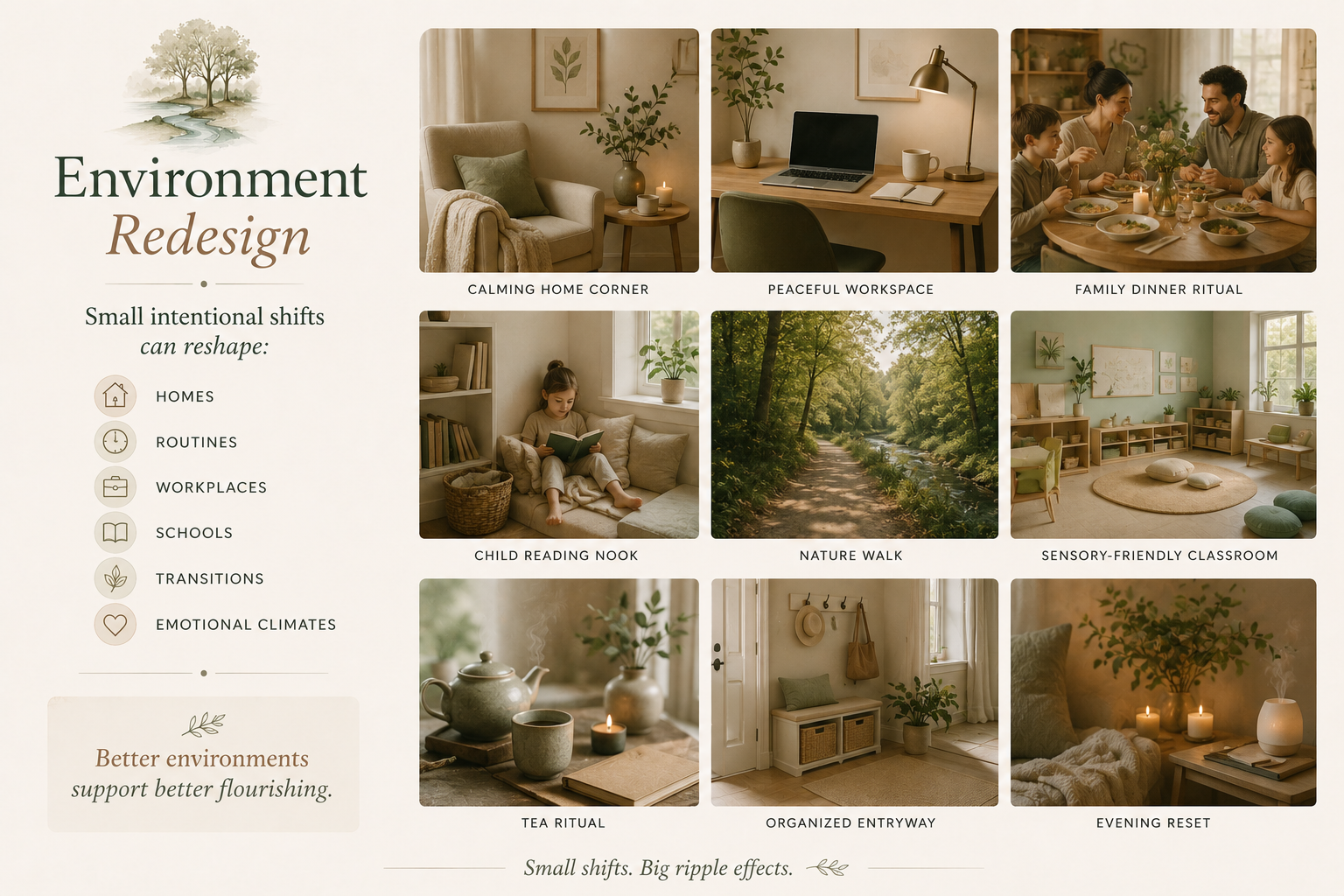
This work may involve:
redesigning family rhythms and routines
creating calmer transitions for children
reducing invisible cognitive load
improving emotional communication within teams
designing more neuroinclusive classrooms
helping leaders build healthier workplace cultures
creating sensory-safe recovery spaces
clarifying expectations and reducing ambiguity
identifying hidden sources of nervous-system strain
developing more sustainable ways of working and living
Small environmental changes can create profound shifts in how people feel and function.

Outcomes
While every experience is unique, people often describe outcomes such as:
greater clarity and calm
reduced overwhelm
improved emotional regulation
healthier communication
increased sustainability and energy
stronger connection within relationships and teams
more supportive routines and rhythms
greater self-understanding
environments that feel safer, gentler, and more aligned
renewed capacity for creativity, focus, leadership, and wellbeing
The goal is not perfection, it is creating conditions that support humans more compassionately and sustainably.
Stories From This Work
A Parent Navigating Constant Overload
A highly capable mother arrived feeling exhausted, reactive, and overwhelmed by the invisible demands she was carrying each day. Together, we explored the environmental pressures contributing to nervous-system overload, including fragmented routines, emotional labour, unclear division of responsibilities, and lack of recovery space. Through intentional redesign of rhythms, communication, sensory recovery, and expectations, daily life began to feel calmer, clearer, and more sustainable.
A School Seeking More Neuroinclusive Support
An educational environment struggling with increasing behavioural challenges began exploring how sensory load, transitions, communication patterns, and emotional safety were affecting students and staff. Rather than focusing solely on behaviour management, the work shifted toward creating more supportive environmental conditions that improved regulation, connection, and wellbeing across the wider system.
A Professional Experiencing Burnout
A high-performing professional described feeling constantly “on,” despite external success. Through Environment Redesign, we identified chronic cognitive overload, blurred boundaries, urgency-based work culture, and limited recovery opportunities. Small but meaningful shifts in expectations, rhythms, communication, and recovery practices helped create greater clarity, sustainability, and emotional steadiness.
The Oak & River Compass
The Oak & River Compass is a neuroinclusive reflection and environment redesign tool designed to help individuals and teams make invisible pressures visible.
Using guided reflection across key environmental domains, the Compass supports greater awareness, clarity, and practical next steps for intentional change.